
How to Oil a Butcher Block (and How Often)
A step-by-step guide to oiling a butcher block: the right food-safe oil, how often to do it, signs your board is thirsty, and the mistakes to avoid.
Get early access to holiday gift sets and care tips.
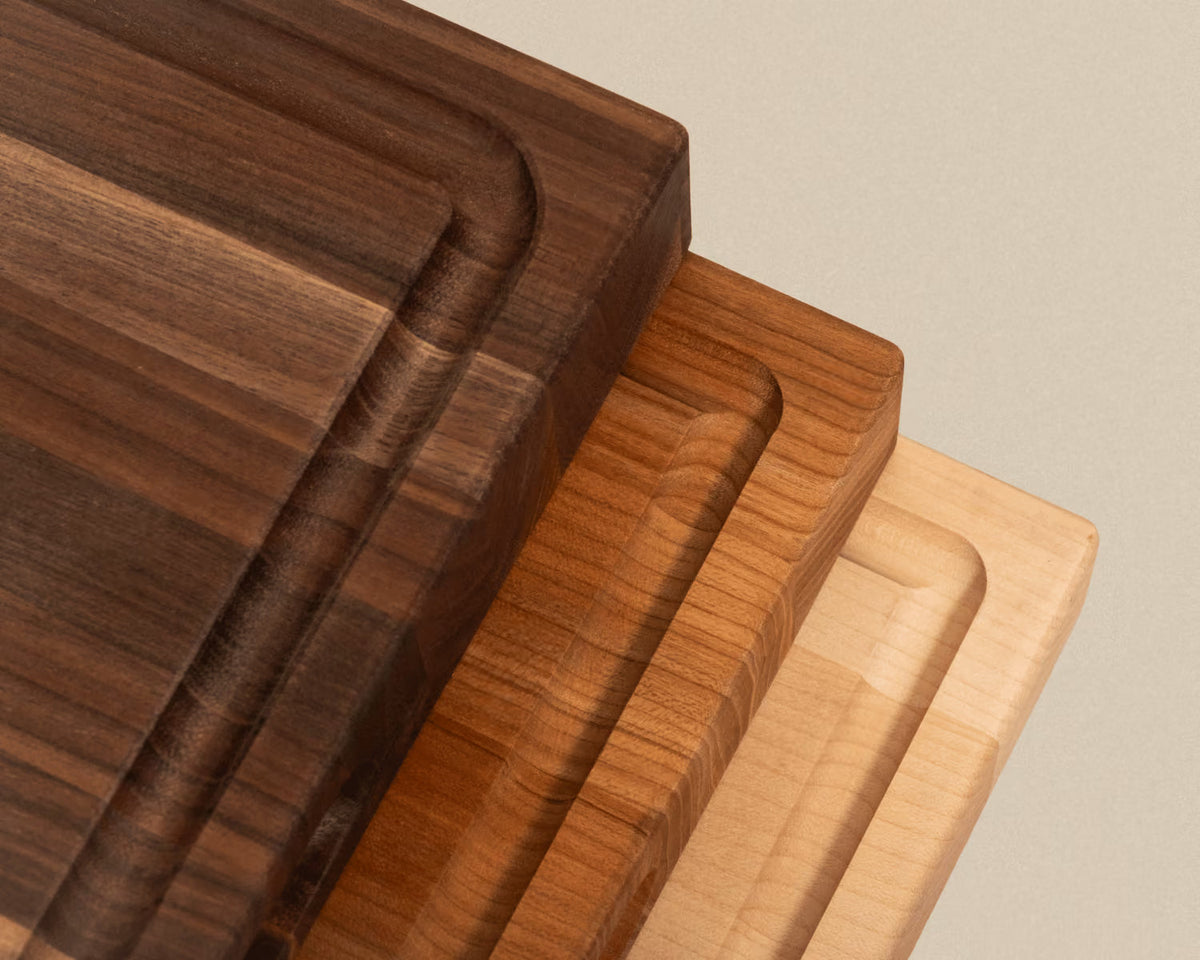
Maple, walnut, or cherry? Compare hardness, knife feel, color, and how each wood ages to choose the right cutting board or butcher block.
All three are excellent cutting board woods, so the best choice comes down to how you cook and what you want on your counter. Hard maple is the hardest and most durable of the three, walnut is slightly softer and a little easier on knife edges with a rich dark color, and cherry sits in between with a warm tone that deepens as it ages. If you want one workhorse board, choose maple; if you want a showpiece for serving and hosting, choose walnut; if you want a classic that gets better looking over time, choose cherry.
Not every wood belongs under a knife. The best cutting board woods share a few traits:
Maple, walnut, and cherry check every box, which is why they're the three most common woods for quality butcher blocks.
Wood hardness is commonly measured with the Janka hardness test, which records the force needed to press a steel ball into the wood. Commonly cited approximate values:
What that means in the kitchen:
All three are well within the range that is friendly to good kitchen knives.
Hard maple has long been a favorite in professional kitchens, and for good reason.

Why choose maple:
Things to know: A light-colored board can show stains from foods like beets or berries more readily than a dark one. Prompt cleaning and regular oiling help.
The North Woods Maple Butcher Block is the heaviest and hardest board we offer, built for cooks who are hard on their tools.
Walnut is the one people notice when they walk into the kitchen.

Why choose walnut:
Things to know: Walnut is often the most expensive of the three, and its softer surface may show fine knife marks sooner than maple.
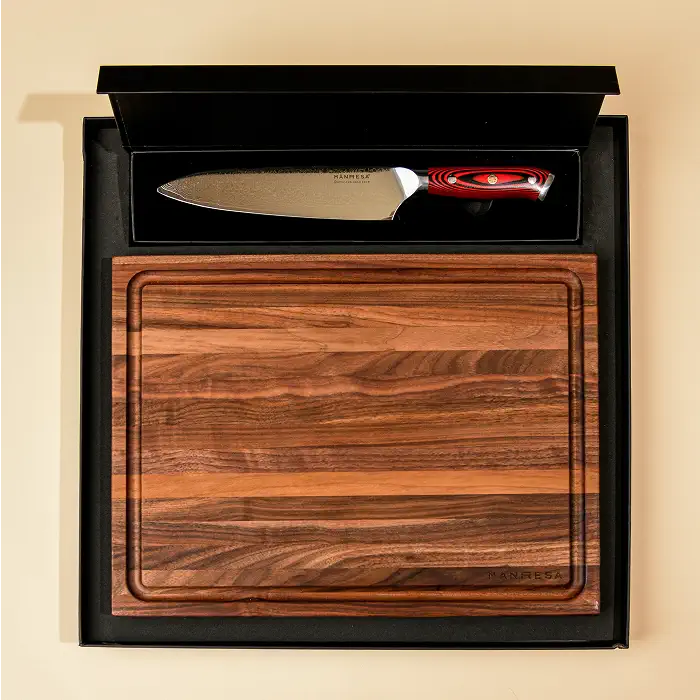
The Walnut Butcher Block is made from American black walnut. Engraved with a name or logo, it's also one of our most popular gift picks.
Cherry is the warm, traditional choice, and it changes with time.

Why choose cherry:
Things to know: Cherry is the softest of the three, so it will collect knife marks and patina over time. If you love a board that tells the story of every meal, that's a feature.
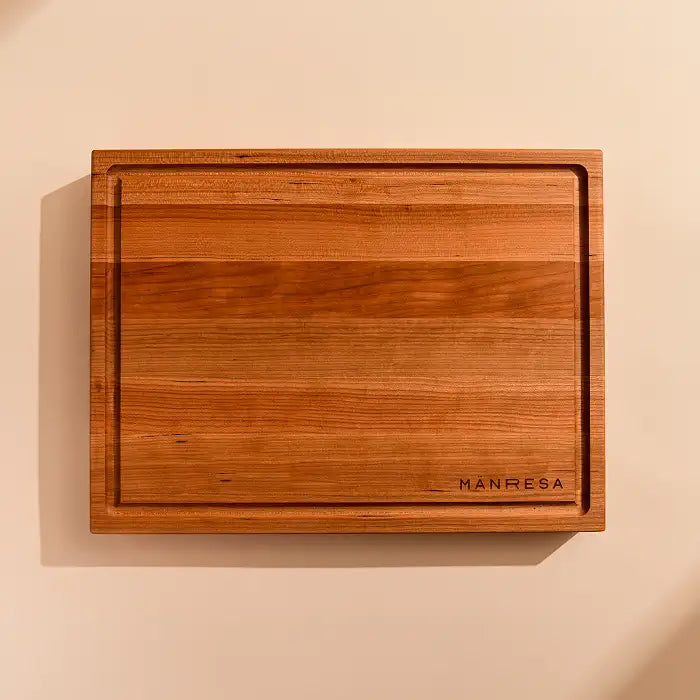
The Appalachia Cherry Butcher Block is our classic, the board you can rely on from a backyard barbecue to a busy weeknight.
Every Mänresa butcher block uses edge grain construction, comes finished in food-safe oils, and is available in 16 x 12 x 1.5, 18 x 14 x 1.5, and 20 x 16 x 1.5 inch sizes, with or without engraving. Shipping is free on all US orders.
Whichever wood you choose, the care is the same: wipe it with a damp cloth and mild soap after each use, dry it right away, oil it about once a month with food-safe mineral oil, and keep it out of the dishwasher. For why wood is worth it in the first place, read wood vs. plastic cutting boards, and for more gift ideas, see our gifts for home cooks guide.
What is the best wood for a cutting board? Hard maple, walnut, and cherry are all top choices. Maple is the most durable, walnut the most striking, and cherry the classic that ages beautifully.
Is walnut or maple better for a cutting board? Maple is harder and more dent-resistant; walnut is a bit gentler on knives and hides stains better. Both are excellent.
Does cherry wood darken over time? Yes. Cherry naturally deepens to a richer reddish-brown with age and light exposure.
Which cutting board wood is easiest on knives? Of the three, the slightly softer walnut and cherry have the gentlest feel, though maple is still very knife-friendly.
Do different woods need different care? No. Maple, walnut, and cherry boards all follow the same wash, dry, and monthly oiling routine.
Explore more insights, recipes, and product care tips.
