
How to Oil a Butcher Block (and How Often)
A step-by-step guide to oiling a butcher block: the right food-safe oil, how often to do it, signs your board is thirsty, and the mistakes to avoid.
Get early access to holiday gift sets and care tips.
Is a wooden butcher block or a plastic cutting board better? We look at food safety research, knife care, and microplastics, without the hype.
Few kitchen debates last as long as wood vs. plastic cutting boards. For years, plastic was marketed as the more sanitary option. More recently, questions about microplastics have pushed many cooks back toward wood. As a company that makes edge grain butcher blocks, we obviously have a point of view, so in this article we have tried to stick to what reputable sources actually say, link to them, and be clear about what is still uncertain.
Both wood and plastic boards can be used safely when they are cleaned well and used sensibly. The differences show up in three places: how each material behaves once it is scratched, how it treats your knife, and whether it sheds plastic particles into your food. On those points, a good hardwood board holds up very well.
The USDA Food Safety and Inspection Service says consumers may choose either wood or a nonporous surface such as plastic for cutting raw meat and poultry. It also notes that nonporous surfaces are easier to clean than wood. Its most important advice applies to every board:
A widely cited study from the University of Wisconsin, published in the Journal of Food Protection in 1994, contaminated new and used plastic and hardwood boards with bacteria including E. coli, Listeria, and Salmonella. Bacteria on plastic were readily recovered for minutes to hours, while recoveries from wood were generally lower, with the difference growing over time. The authors concluded their results did not support the common claim that plastic boards are more sanitary than wood.
In a later review in the Journal of AOAC International, researcher Dean Cliver noted that knife-scarred plastic can be very difficult to clean and disinfect, and that wood's porous structure draws moisture and bacteria in, where they do not appear to return to the surface. He also pointed to epidemiological work suggesting home use of plastic boards was associated with greater risk than wood, while cautioning that the evidence overall is limited.
The fair takeaway is not that wood is magically germ-free. It is that a well-kept hardwood board is a perfectly hygienic choice, and that heavily scratched boards of any material deserve extra attention. Cleaning habits and avoiding cross-contamination matter more than the material.
Every time your knife hits the board, the edge takes a tiny bit of wear. That is why cutting surfaces matter for anyone who has invested in a good chef knife.
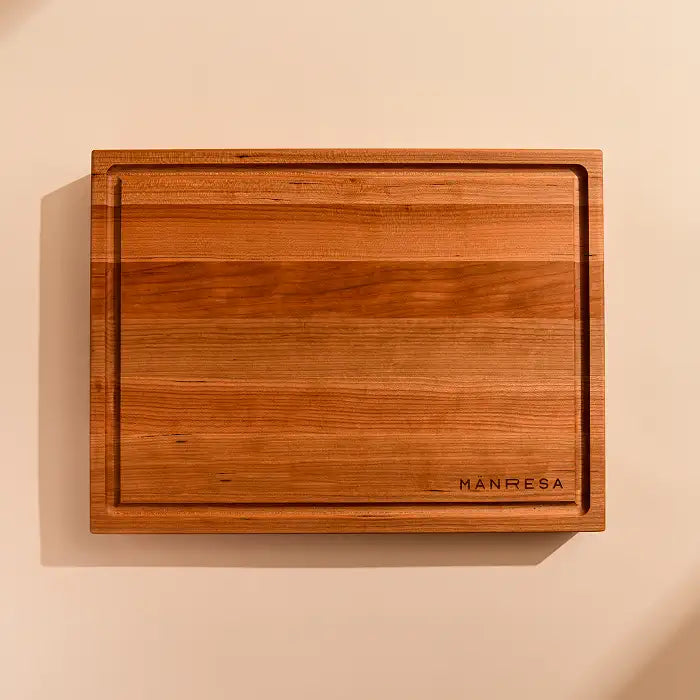
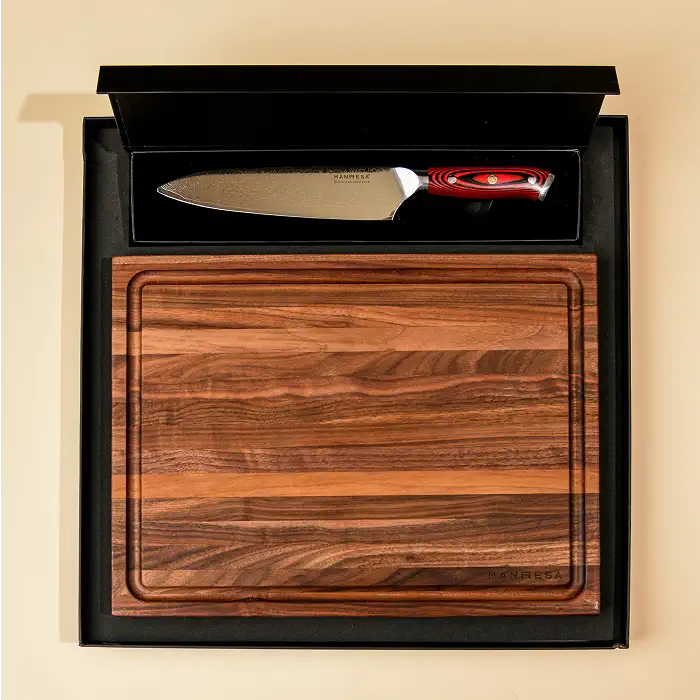
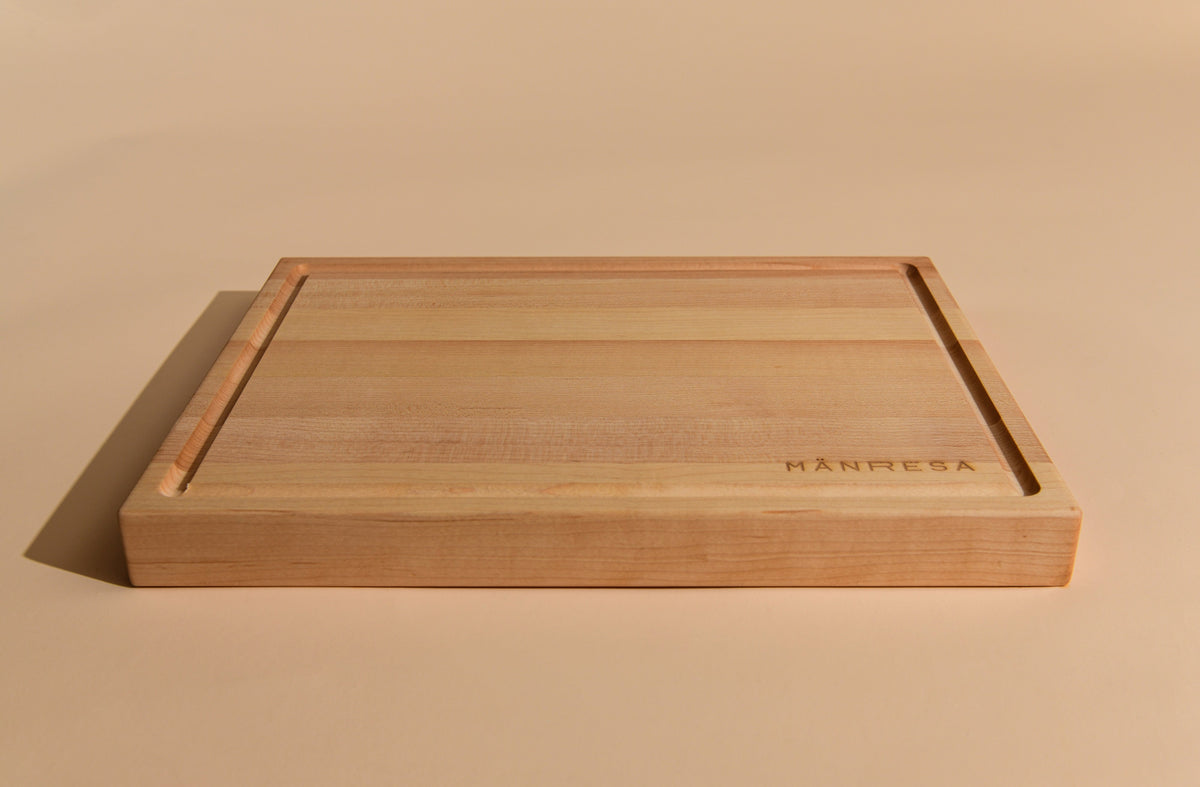
All Mänresa butcher blocks use edge grain construction, which pairs durability with a surface that is friendly to knives. A board like the North Woods Maple Butcher Block, our heaviest and hardest, holds up to heavy chopping, while the Walnut Butcher Block brings a darker, showpiece look to the same everyday function.
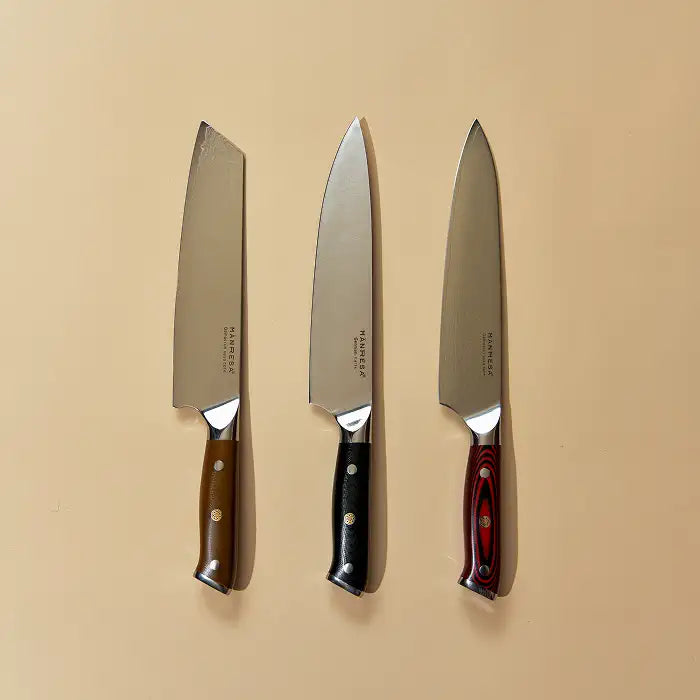
If you are pairing a board with a new blade, our kitchen knives are designed for exactly this kind of daily work. A good board helps any of them hold an edge longer between sharpenings.
A 2023 study in Environmental Science & Technology, Cutting Boards: An Overlooked Source of Microplastics in Human Food?, measured particles released while chopping on polyethylene and polypropylene boards. The researchers found that both released microplastics, with polypropylene boards releasing more than polyethylene by 5 to 60 percent in mass and 14 to 71 percent in particle count. Based on their assumptions, they estimated a person could be exposed to tens of millions of microplastic particles per year from a plastic board.
It is important not to overstate this. In the same study, a preliminary toxicity test of the polyethylene microplastics did not show adverse effects on mouse cells over 72 hours. Research into how microplastics affect human health is ongoing, and we do not know the full picture yet. What the study does show is that plastic boards are a measurable source of plastic particles in food, which is reason enough for many cooks to prefer a surface that does not shed plastic at all.
That is part of why we build our tools the way we do: Earthborn Cookware, No Coatings or Plastics.
A wooden board asks for a few minutes of care, and rewards you for it:
For a complete routine covering boards, knives, and cast iron, see our simple guide to caring for your Mänresa kitchen tools.
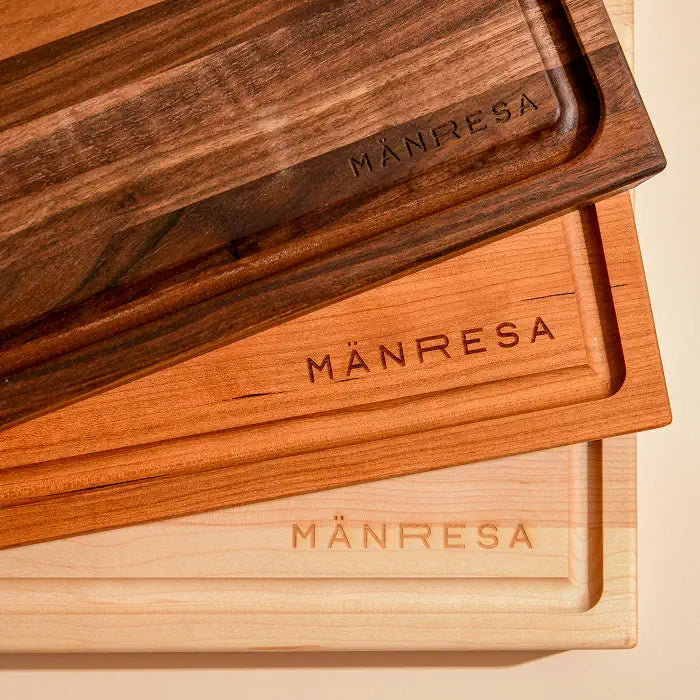
If you are ready to retire a scarred plastic board, an edge grain hardwood butcher block is a practical, knife-friendly, plastic-free upgrade. Mänresa boards come in North Woods Maple, Appalachia Cherry, and American Black Walnut, in three sizes, with optional engraving.
Shop Mänresa butcher blocks and find the board that fits your kitchen.
Explore more insights, recipes, and product care tips.

