
How to Oil a Butcher Block (and How Often)
A step-by-step guide to oiling a butcher block: the right food-safe oil, how often to do it, signs your board is thirsty, and the mistakes to avoid.
Get early access to holiday gift sets and care tips.
End grain or edge grain? We compare how each butcher block is built, how it treats your knives, how much care it needs, and which one most home cooks should buy.
End grain butcher blocks are built from wood pieces stood on end, so your knife slips between the fibers; they're gentle on edges and hide knife marks, but they cost more and need more oil. Edge grain boards are built from long strips laid on their sides, which makes them durable, stable, lower-maintenance, and more affordable. For most home cooks who want one hard-working, all-purpose board, edge grain is the practical choice.
Here's how the two constructions differ and how to decide.
Picture a piece of lumber as a bundle of drinking straws, where each straw is a wood fiber running the length of the board. How those straws face your knife defines the board.

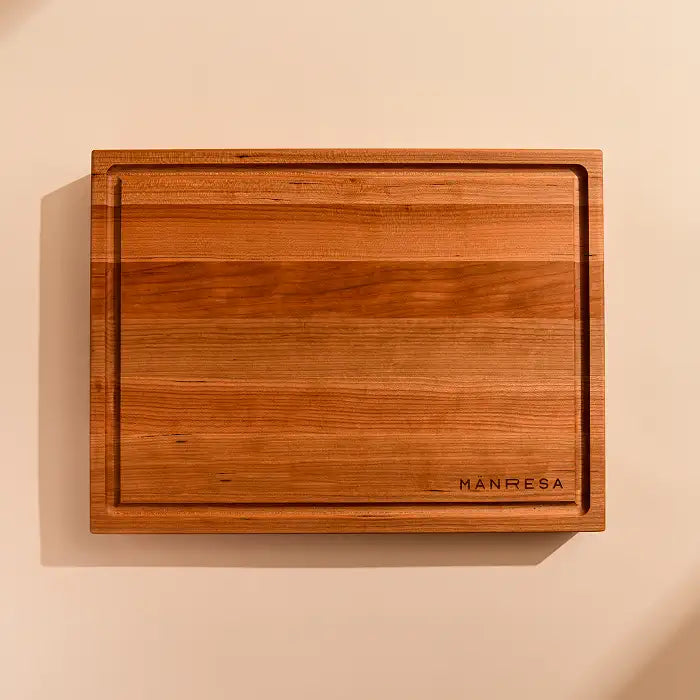
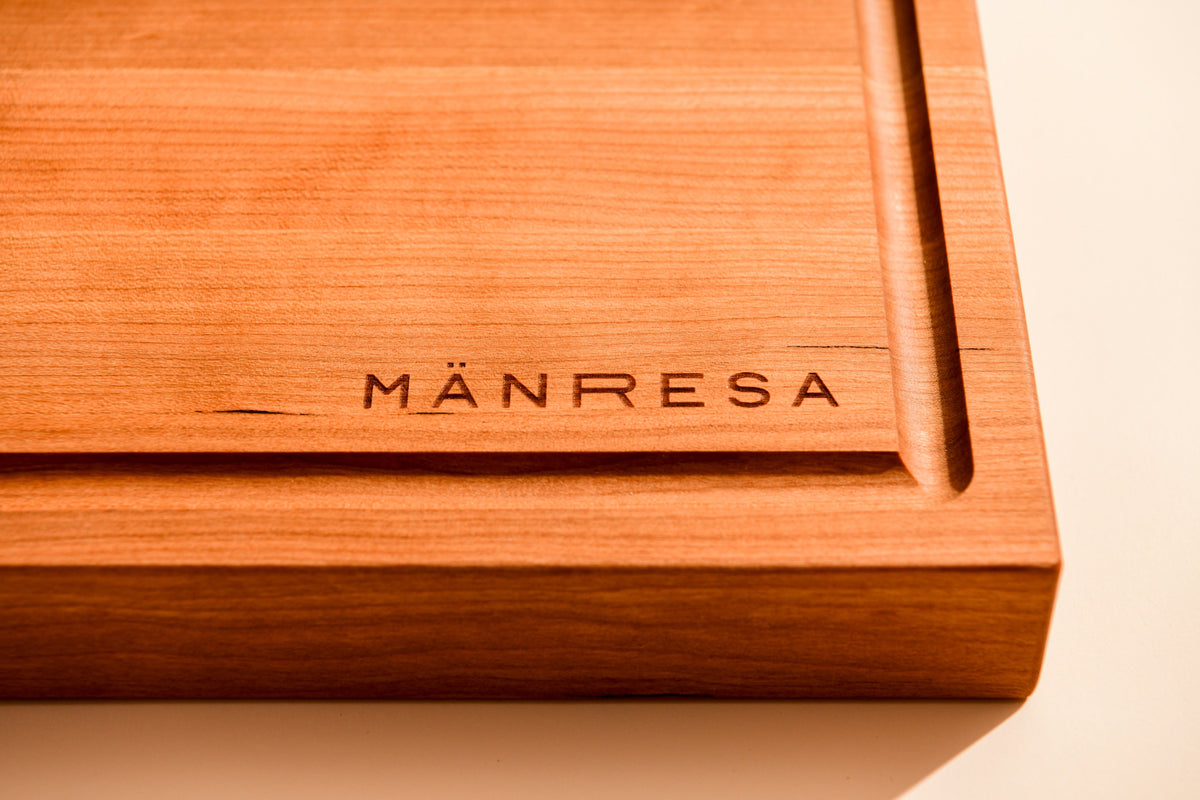
Long strips of wood are glued together side by side, with the narrow edge of each strip facing up. The fibers run lengthwise along the cutting surface. You'll see long, parallel stripes of grain across the board.
Short blocks of wood are cut and glued so the ends of the fibers face up, like the top of a bundle of straws. This creates the familiar checkerboard look.
Face grain boards show the wide, flat face of a plank. They are common for thin cutting and serving boards but are generally the least resistant to knife marks, so most butcher blocks use edge or end grain.
End grain has the edge here. When a blade strikes end grain, it slides between the fibers instead of cutting across them, and the fibers tend to close back up. That's easier on a sharp edge and is why end grain boards are often described as "self-healing."
Edge grain is still knife-friendly. A hardwood edge grain board is far gentler on blades than glass, stone, or ceramic surfaces, and it's the construction many professional and home kitchens rely on. If you hone your knife regularly, an edge grain board will serve it well. (New to knife care? See our guide on how to choose a chef's knife.)
Edge grain is typically more stable over time. Because the fibers run lengthwise and the board is made of long continuous strips, edge grain boards are generally less prone to cracking and separating along glue lines.
End grain is more absorbent. Those open fiber ends wick up water and oil more readily. That's part of what makes them gentle on knives, but it also means they can be more sensitive to moisture and need more attention to avoid splitting.
Either way, keep any wooden board out of the dishwasher and never soak it. A few minutes of oiling once a month goes a long way.
Choose edge grain if you:
Choose end grain if you:
Every Mänresa butcher block uses edge grain construction and is built for all-purpose knife work: breaking down meats, prepping vegetables, and slicing fruit. Each comes finished in food-safe oils, is available in 16 x 12 x 1.5, 18 x 14 x 1.5, and 20 x 16 x 1.5 inch sizes, and can be ordered with or without engraving.

If you're still weighing materials altogether, see wood vs. plastic cutting boards.
Is end grain really better than edge grain? It's gentler on knives and hides marks better, but edge grain is generally more stable, easier to maintain, and more affordable. "Better" depends on how you cook.
Does edge grain dull knives? Any cutting surface wears an edge over time, but a hardwood edge grain board is much kinder to knives than glass, stone, or ceramic. Regular honing keeps your blade in shape.
How can I tell if a board is end grain or edge grain? End grain shows a checkerboard of small squares or rings on top. Edge grain shows long, parallel strips running the length of the board.
Do end grain boards need more oil? Yes. Exposed fiber ends absorb more, so they usually need oiling more often.
Are Mänresa butcher blocks end grain or edge grain? All Mänresa butcher blocks use edge grain construction.
Explore more insights, recipes, and product care tips.
