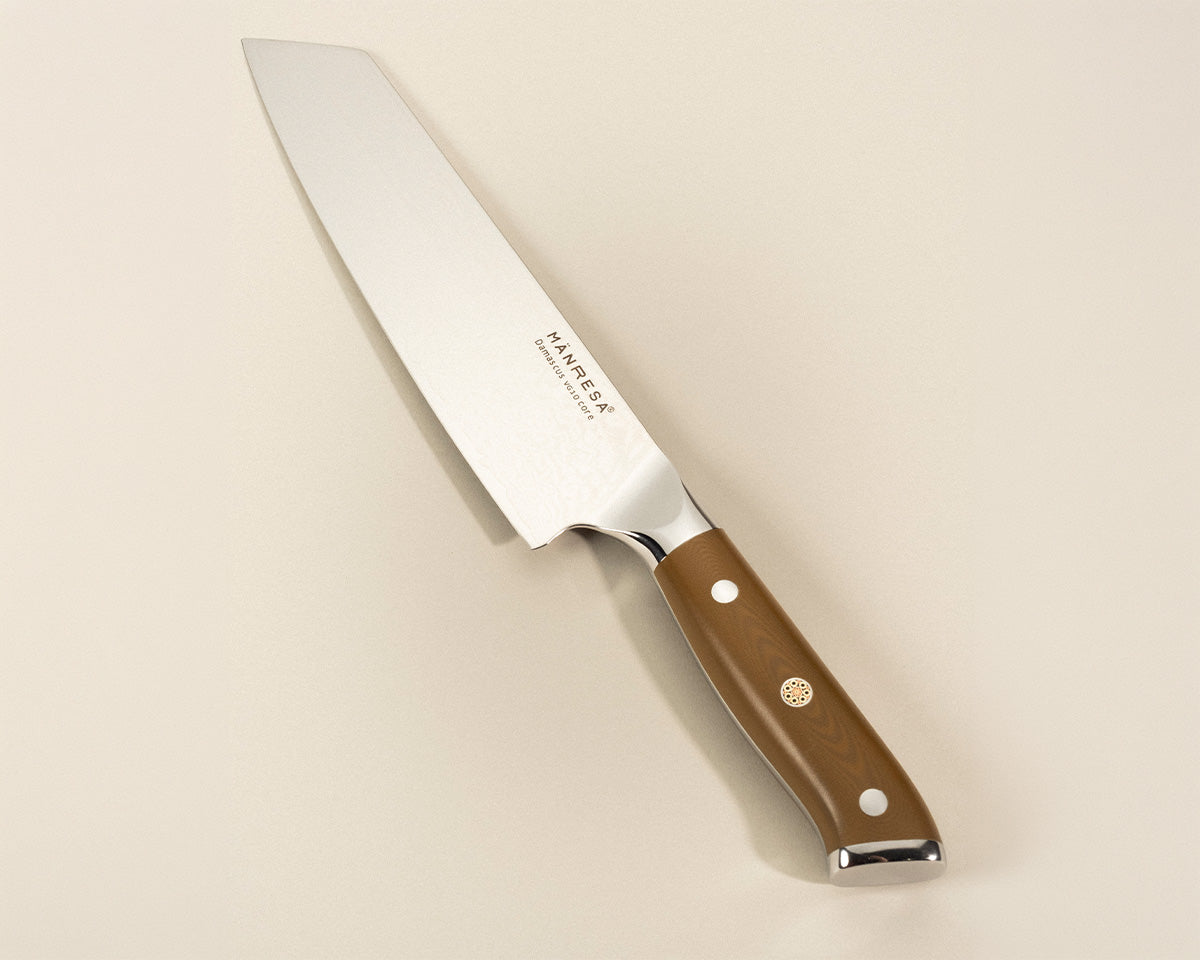
Mänresa Traditional 8 Inch Japanese Kiritsuke Chef Knife with Damascus blade

How to Choose a Chef's Knife: German vs. Japanese Style

German or Japanese? Learn how to choose a chef's knife by steel, blade shape, and maintenance, and see how the German Pro, American Pro, and Japanese Pro compare.

Table of content

4 min read

Share this post

If you only own one good knife, it should be a chef's knife. It handles most of the work in a home kitchen, from dicing onions to slicing a roast. But shopping for one can be confusing: German or Japanese, stainless or Damascus, which shape, which steel? This guide breaks down how to choose a chef's knife in plain language, then maps those choices to the three 8-inch knives we make at Mänresa.

Start with how you cook

Before comparing steel, think about your habits:

  • Do you chop fast and hard, rocking through herbs and hacking through squash? You will want a forgiving, durable blade.
  • Do you enjoy precise, careful prep, thin slices and fine dice? A harder, sharper-feeling blade rewards that.
  • How much maintenance do you want? Some knives are more tolerant of neglect than others.
  • Who else uses it? A shared family knife benefits from toughness.

There is no single best chef's knife, only the best fit for the person holding it.

Why 8 inches is the sweet spot

An 8-inch blade is the most common chef's knife length for home cooks. It is long enough to slice through large produce and roasts, yet compact enough to control on a standard cutting board. All three Mänresa chef knives use an 8-inch blade, so the real decision comes down to style and steel.

German vs. Japanese chef knives: the key differences

These are broad tendencies, not hard rules, but they will help you understand what you are choosing between.

Steel and edge

  • German-style knives typically use tougher, slightly softer stainless steels. They resist chipping, tolerate a bit of rough use, and are easy to bring back to sharp.
  • Japanese-style knives typically use harder steels that can take and hold a very keen edge, rewarding careful technique. Harder steel asks for a little more care to avoid chips.

Blade shape

  • German-style blades tend to have more curve along the edge, which suits a rocking motion.
  • Japanese-style blades tend to be flatter, which suits push-cutting and precise slicing. The kiritsuke is a distinctive Japanese profile with an angled tip.

Feel and maintenance

  • German style: sturdy, durable, forgiving. A great everyday workhorse.
  • Japanese style: precise, refined, and striking, for cooks who enjoy the craft of prep.

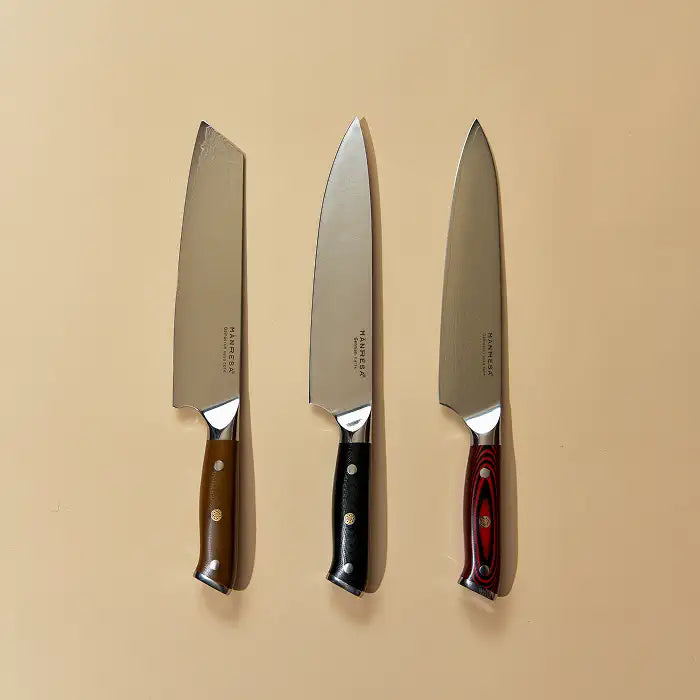
Meet the three Mänresa chef knives

German Pro: the dependable workhorse

The Classic 8 Inch German Pro Chef Knife is the knife we call our workhorse. The blade is made of 1.4116 stainless steel, which strikes a useful balance: hard enough to hold up to heavy cutting, chopping, and dicing, yet malleable enough to avoid chipping. That same balance makes keeping a sharp edge simple.

Choose the German Pro if:

  • You want one durable knife for everything, from breaking down meat to slicing fruit.
  • You prefer easy maintenance.
  • You are buying for a new cook or a busy family kitchen.

Japanese Pro: precision with presence

The Traditional 8 Inch Japanese Kiritsuke Chef Knife brings old and new school Japanese techniques together. Its kiritsuke profile is made for confident, precise everyday prep. The blade is built on a VG-10 core, a steel known for its durable culinary performance, with a Damascus layer that gives it a distinctive textured look.

Choose the Japanese Pro if:

  • You love clean, precise cuts and careful knife work.
  • You appreciate craft and the story behind a tool.
  • You want a knife with real presence on the cutting board.

American Pro: the best of both

The Modern 8 Inch American Pro Chef Knife takes its cue from America's habit of borrowing the best from different places. Its blade shape sits between our German and Japanese knives, so it feels at home on everything from a weeknight onion to a weekend roast. It pairs a VG-10 steel core wrapped in Damascus with a G-10 handle, a highly water-resistant resin made to withstand decades of use.

Choose the American Pro if:

  • You cannot decide between German and Japanese styles.
  • You want VG-10 performance in a versatile, all-purpose shape.
  • You want a handle built for long-term, low-wear use.

Quick comparison

  • German Pro: 1.4116 stainless steel; durable, chip-resistant, easy to sharpen. Best for workhorse everyday use.
  • American Pro: VG-10 core with Damascus, G-10 handle; blade shape between German and Japanese. Best for versatility.
  • Japanese Pro: VG-10 core with Damascus; kiritsuke profile. Best for precision and craft.

Compare all three side by side in our kitchen knives collection.

Caring for your chef's knife

Whichever style you choose, the same routine keeps it performing:

  • Hone before each use. A few passes on a honing rod keeps the edge aligned.
  • Sharpen every few months on a whetstone or with a professional.
  • Wash by hand and dry immediately. Never put a good knife in the dishwasher.
  • Store it safely on a magnetic strip or in a blade guard, not loose in a drawer.
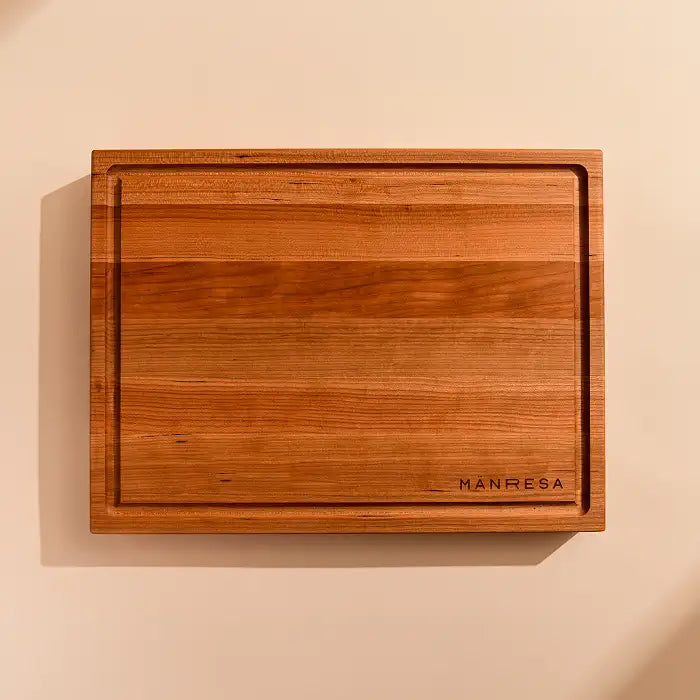
  • Cut on wood. A quality board like our edge grain butcher blocks is far kinder to an edge than glass or stone.

For more detail, read our simple guide to caring for your Mänresa kitchen tools.

Pair it with a board

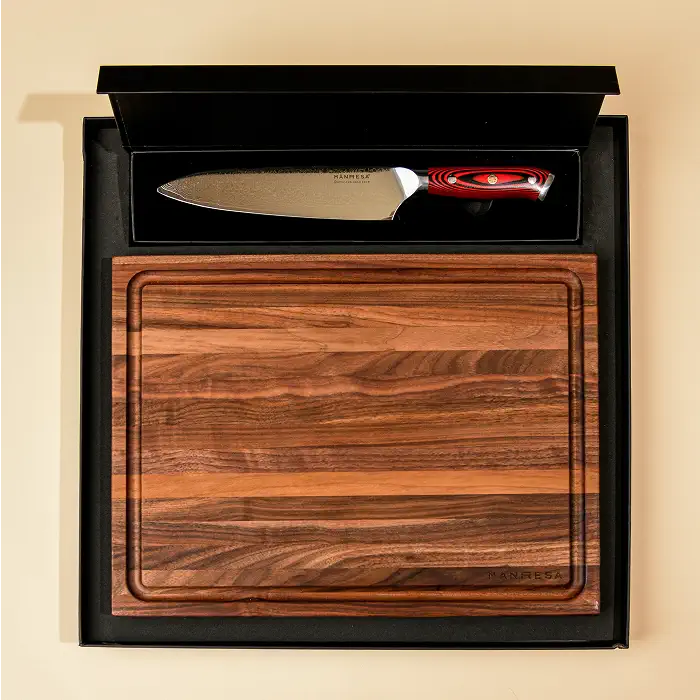
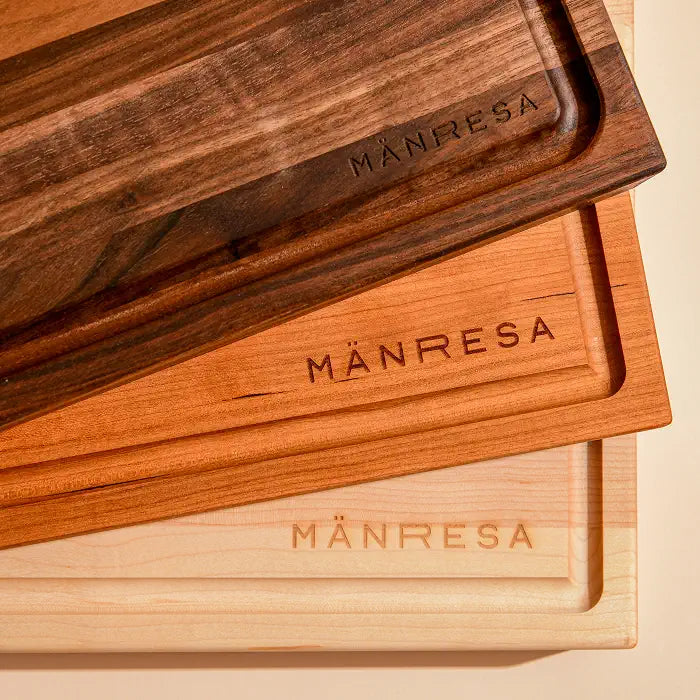
A great knife deserves a great surface. Our butcher block and chef knife gift sets pair any of the three knives with a North Woods Maple, Appalachia Cherry, or Walnut board, with optional engraving. Build yours with the Butcher Block Chef Knife Gift Set.

Find your knife

Knowing how to choose a chef's knife comes down to a simple question: how do you like to cook? Go German Pro for durability, Japanese Pro for precision, or American Pro for a bit of both.

Shop Mänresa chef knives and find the one that feels like it was made for your hand.

Related Articles

Explore more insights, recipes, and product care tips.

Learn more about N4
Oiled Appalachia Cherry butcher block by Mänresa

How to Oil a Butcher Block (and How Often)

A step-by-step guide to oiling a butcher block: the right food-safe oil, how often to do it, signs your board is thirsty, and the mistakes to avoid.

Walnut vs. Maple vs. Cherry: Best Wood for a Cutting Board

Walnut vs. Maple vs. Cherry: Best Wood for a Cutting Board

Maple, walnut, or cherry? Compare hardness, knife feel, color, and how each wood ages to choose the right cutting board or butcher block.

End Grain vs. Edge Grain Butcher Blocks: Which Should You Buy?

End Grain vs. Edge Grain Butcher Blocks: Which Should You Buy?

End grain or edge grain? We compare how each butcher block is built, how it treats your knives, how much care it needs, and which one most home cooks should buy.